
Photo: Pexels
Quiet Tonight, Storm Possible Tuesday
Skywatchers in the northern United States may get a chance to see the northern lights on Tuesday night, according to the latest forecast from the National Oceanic and Atmospheric Administration (NOAA). The NOAA Space Weather Prediction Center expects a minor geomagnetic storm — classified as G1 on its five-level scale — on Tuesday, November 17.
Right now, there is no geomagnetic storm in progress. NOAA reports the planetary Kp index, a 0-to-9 measure of geomagnetic disturbance, at around 0.3 to 1.3 — firmly in quiet territory, since storms begin at Kp 5. Tonight, Monday, November 16, viewing is rated poor, with a maximum Kp of 3.7. The aurora will be visible only from far-northern latitudes, including Alaska, northern Canada, Iceland and Norway.
Tomorrow looks better. With a forecast maximum Kp of 4.7, viewing is rated fair, and the northern lights could be visible from U.S. and Canadian border states and from Scotland under dark, clear skies. By Wednesday, November 18, conditions fall back to poor, with a maximum Kp of 2.3.
What the Forecast Says
NOAA's three-day space weather predictions, issued on November 15, put the planetary A-index — a daily average of geomagnetic activity — at 15 for Monday, 20 for Tuesday and 12 for Wednesday. The chance of a minor geomagnetic storm at middle latitudes is 15 percent on Monday, rising to 25 percent on Tuesday and falling to 10 percent on Wednesday. At high latitudes, the chance of a minor storm is 35 percent on Monday, 30 percent on Tuesday and 30 percent on Wednesday. The chance of a minor radio blackout is 15 percent, with a 5 percent chance of a strong one.
If the forecast holds, the aurora could be possible down to about 50 to 55 degrees latitude — covering the northern United States, the UK and northern Germany.
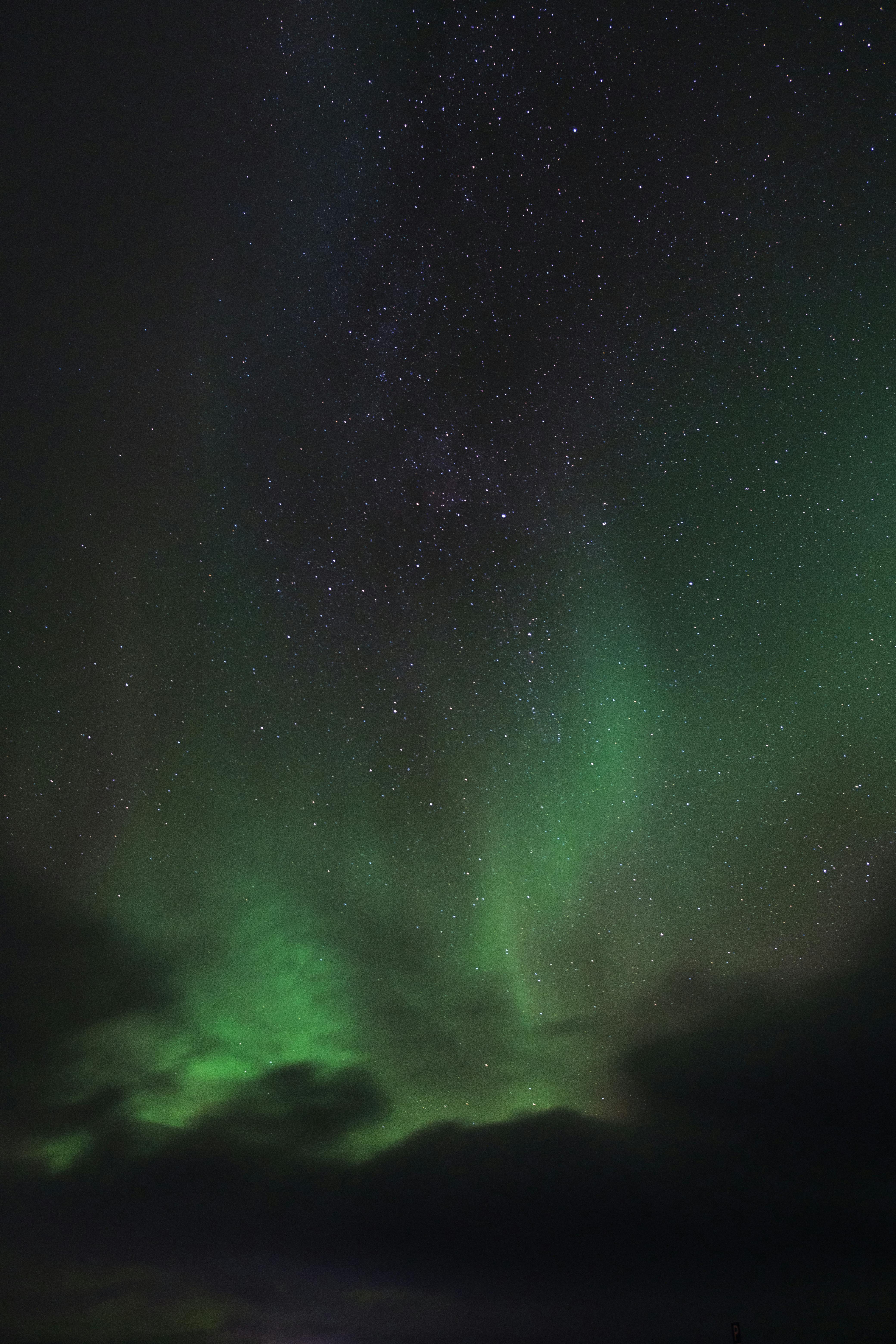
Photo: Pexels
How to Read the Forecast
NOAA's G-scale starts at Kp 5, which is a G1 minor storm, and tops out at Kp 9, a G5 extreme storm. Even on a promising night, seeing the aurora is not guaranteed: viewers need dark, clear skies and a north-facing horizon, away from city lights. The best viewing usually comes in the hours around midnight local time.
Sources: NOAA Space Weather Prediction Center, Orbit Codex.
Update: Storm May Last Into Early Wednesday
Updated Wednesday, November 18, 2026, 8:40 a.m. CST: NOAA's latest forecast now shows the G1-class geomagnetic storm lasting into the early hours of Wednesday, November 18, with Kp 5 conditions forecast as darkness falls across North America on Tuesday night. If conditions are right, the aurora could become visible from dark spots in 12 states near the Canadian border: Alaska, Washington, Idaho, Montana, North Dakota, South Dakota, Minnesota, Wisconsin, Michigan, Maine, Vermont and New Hampshire. The moon reaches its first-quarter phase and will shine brightly until around midnight, leaving the rest of the night dark for potential sightings. Even so, a sighting is not guaranteed: viewers need dark, clear skies and a north-facing horizon, away from city lights. Source: Forbes, citing NOAA's Space Weather Prediction Center.
Comments
Post a Comment